How to Build a Movement Practice That Lasts
You know movement makes you feel better.
You sleep better when you're active. Your energy improves. Your body feels stronger and more capable. Yet somehow, staying consistent can feel surprisingly difficult.
Maybe you've started and stopped more workout routines than you can count. Maybe life got busy, your schedule changed, or you simply got tired of trying to keep up with a plan that never quite fit your real life. What began with excitement slowly became another thing on your to-do list.
If that sounds familiar, the problem probably isn't your motivation.
Most people don't struggle because they lack discipline. They struggle because they've been taught to approach movement in a way that isn't sustainable. The fitness industry often celebrates intensity, extremes, and quick results, while overlooking the thing that actually creates lasting health: consistency over time.
At Ember Wellness Studio, we believe movement should support your life, not take it over. Whether you're exploring Pilates in Mankato, MN for the first time, returning to exercise after a long break, or simply looking for more sustainable exercise habits, the goal isn't to do more. It's to build a movement practice that feels so integrated into your life that you can continue it for years to come.
Because when it comes to long-term wellness, the best workout isn't the hardest one. It's the one you'll still be doing a decade from now.
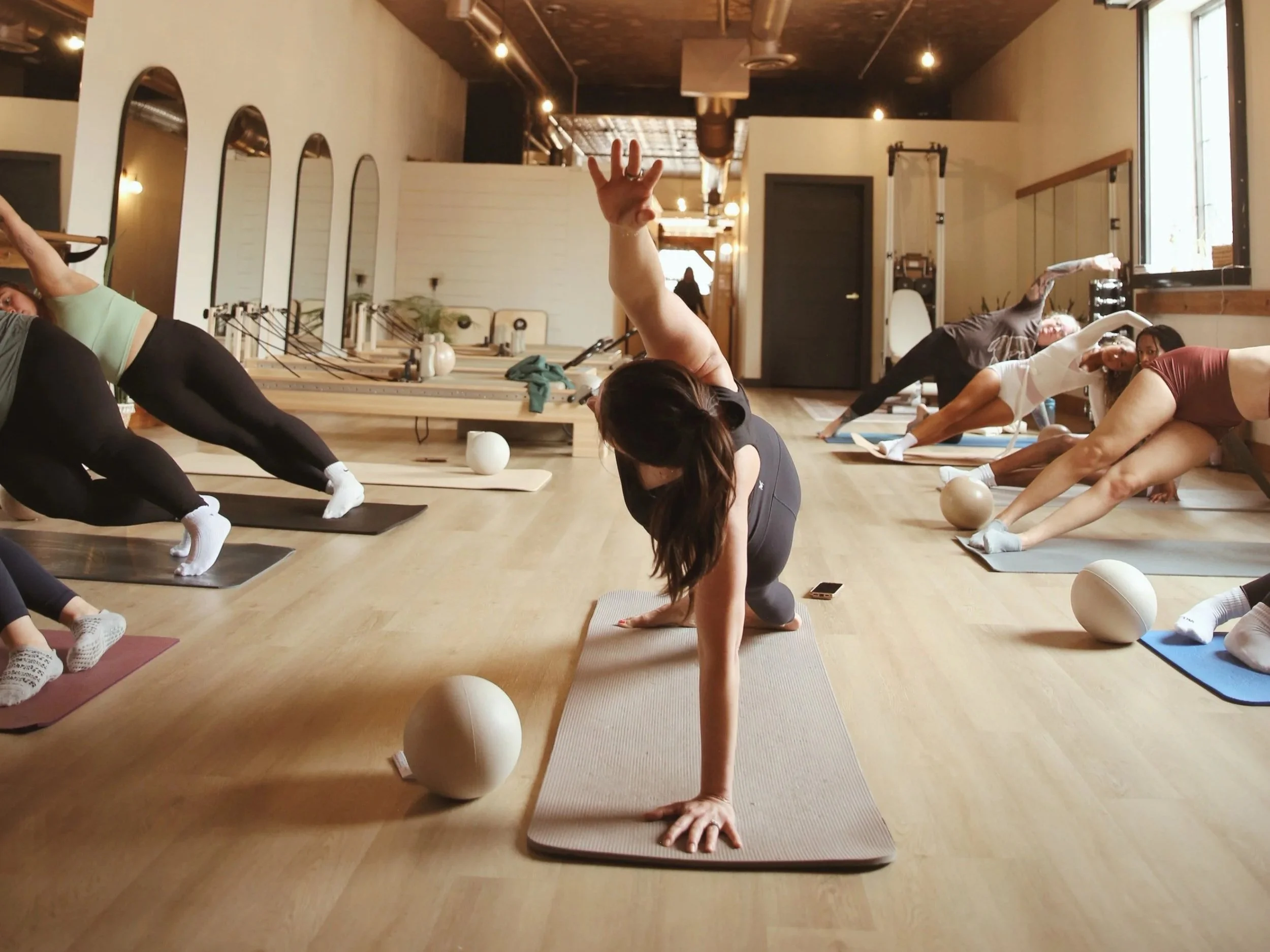
Mat Pilates class at our Balance, Bloom, and Baubles event in collaboration with Bonita in Old Town Mankato.
Why Movement Matters Beyond Weight Loss: The Real Longevity Science
For decades, the fitness industry has largely framed exercise around appearance. Burn calories. Lose weight. Change your body. While movement can certainly influence body composition, the most important benefits happen beneath the surface.
Research consistently shows that regular movement helps:
Preserve muscle mass as we age
Improve balance and coordination
Support cardiovascular health
Enhance cognitive function and memory
Reduce stress and anxiety
Improve sleep quality
Maintain independence later in life
In other words, movement isn't just about how you look. It's about how you live.
The strongest predictor of long-term health isn't achieving the perfect physique. It's maintaining the ability to move confidently and comfortably throughout your life.
This is one reason Pilates continues to grow in popularity. Whether practicing mat Pilates or Reformer, the focus extends beyond burning calories. Pilates develops strength, mobility, balance, coordination, posture, and body awareness -qualities that support longevity.
At Ember, movement is one of six interconnected pillars that contribute to overall well-being:
Move
Restore
Purify
Eat
Sleep
Relax
Movement doesn't exist in isolation. A healthy body is supported by quality sleep, nourishing food, stress management, recovery, and a lifestyle that reduces unnecessary burdens on the body.
When viewed through this lens, exercise becomes less about punishment and more about self-care.

Our 6 pillars that provide a holistic framework for creating a healthier, more balanced life.
What Consistency Actually Means (And Why It Matters More Than Intensity)
One of the biggest misconceptions in wellness is that consistency means perfection.
People often assume consistency looks like exercising every day, never missing a workout, always pushing harder, or following a rigid schedule.
But sustainable consistency looks very different.
Consistency means returning.
It means showing up again after vacation.
Returning after a busy season at work.
Starting again after your kids' hockey schedule takes over your calendar.
Choosing movement even when it doesn't look exactly how you planned.
The healthiest people aren't necessarily the most disciplined. They're often the most adaptable.
They understand that movement must evolve alongside the realities of life.
A 20-minute walk still counts.
A gentle yoga class still counts.
A Pilates session focused on mobility still counts.
One of the reasons many people struggle to maintain exercise routines is that they set standards that are impossible to sustain. Eventually, life interrupts the plan, and they interpret that interruption as failure.
The better approach is to build systems that allow flexibility.
This mindset reflects the "Move" pillar of wellness, but it also connects to the "Relax" pillar. Chronic stress and self-criticism often sabotage consistency more effectively than any missed workout ever could.
A movement practice should support your life - not become another source of pressure.

How to Build a Movement Practice That Fits Your Life
The best movement routine is not the one that burns the most calories or delivers the fastest results. It's the one you'll actually continue doing. If you're trying to build sustainable exercise habits, start with these principles.
1. Start Smaller Than You Think You Need To
Many people overestimate what they can maintain and underestimate the power of small actions. Instead of committing to six workouts per week, start with two.
Instead of promising yourself an hour every day, begin with twenty minutes. Consistency creates momentum. Momentum creates identity. Identity creates lasting change.
2. Choose Movement You Actually Enjoy
This sounds obvious, but many people ignore it.
If you dread every workout, sustainability becomes difficult. Some people love strength training. Others love walking, dancing, yoga, hiking, or Pilates.
The best movement for beginners is often the activity that feels approachable enough to repeat.
At Ember, we frequently meet people who believed they "weren't exercise people" until they discovered a form of movement, such as Pilates, that felt supportive instead of intimidating.
Enjoyment matters more than most people realize.
3. Focus on How You Feel
Most fitness goals are outcome-based: lose 20 pounds, fit into a certain size, reach a specific number on the scale. The challenge is that outcomes can take months to appear. Feelings provide immediate feedback.
Pay attention to:
Energy levels
Sleep quality
Mood
Stress resilience
Confidence
Mobility
Strength
When movement helps you feel better, it becomes easier to continue.
4. Balance Effort With Recovery
One of the most overlooked aspects of wellness is recovery. This is where our Restore pillar becomes essential. Recovery isn't laziness. It's where adaptation occurs. Muscles rebuild. The nervous system regulates. Energy replenishes.
Without adequate recovery, even the most dedicated movement practice eventually breaks down. This is why restorative practices such as stretching, mobility work, sauna sessions, massage, quality sleep, and mindfulness can be just as important as the workout itself.
5. Build Around Your Current Life
Don't create a routine for your ideal life. Create one for your actual life.
If you're a busy parent, your movement practice will look different than someone with unlimited free time.
If you travel frequently, flexibility matters. If your schedule changes weekly, you'll need adaptable systems. The most sustainable movement practices are realistic.
Not perfect. Realistic.
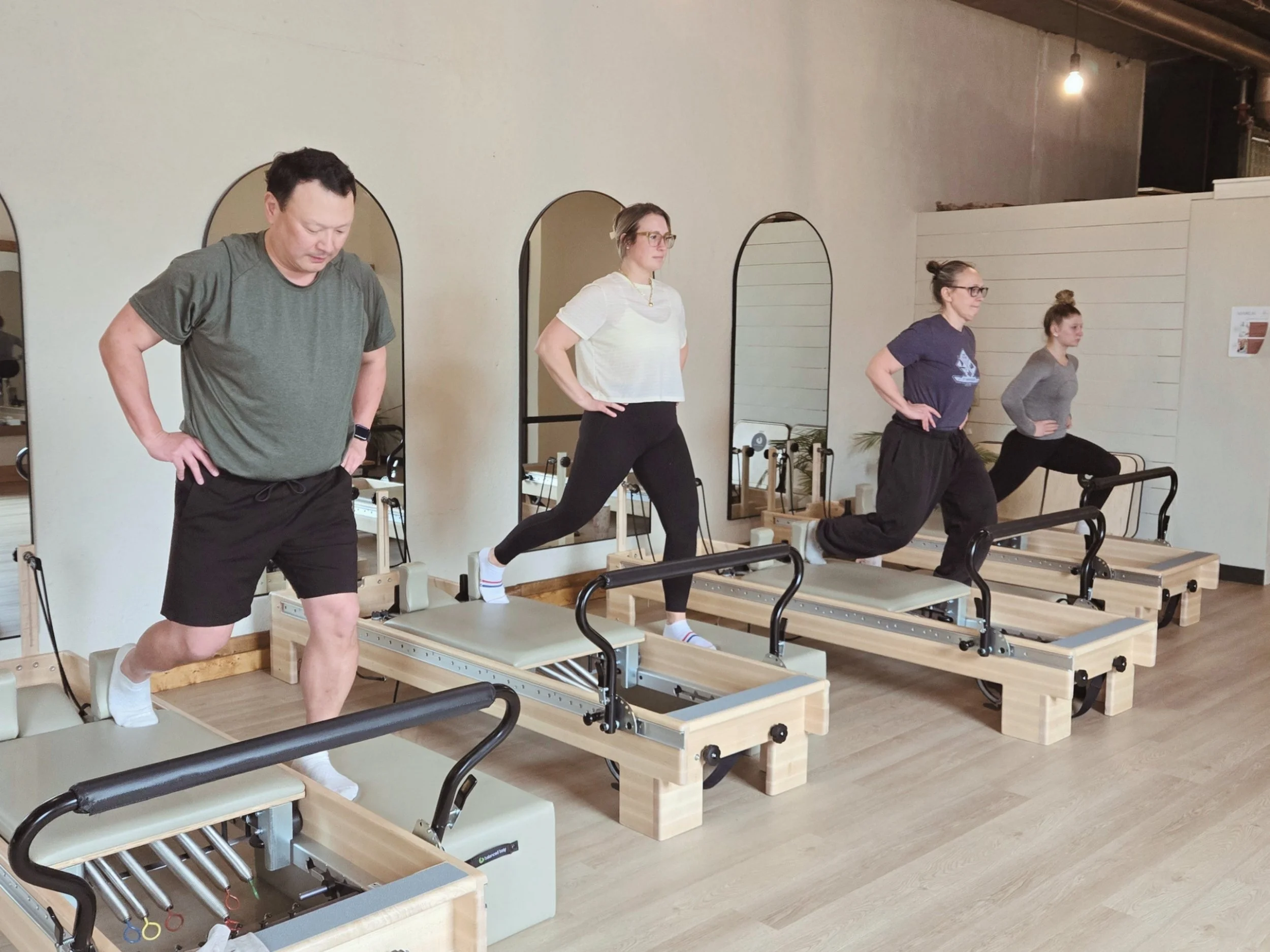
Pilates Reformer class
Signs Your Current Approach Isn't Working
Sometimes the clearest path forward is recognizing what's not serving you.
Here are a few common signs your current approach may need adjusting:
You're Constantly Starting Over
If you repeatedly cycle between intense motivation and complete burnout, your routine may be too aggressive. Sustainable movement should create stability, not extremes.
You Feel Guilty When You Miss A Workout
Movement should enhance your life, not create shame. If missing one workout feels catastrophic, your relationship with exercise may have become overly rigid.
You View Exercise As Punishment
Movement should not be something you have to earn. Nor should it be used to compensate for food choices. A healthy movement practice is rooted in respect for the body, not punishment of it.
You're Always Exhausted
More is not always better. Persistent fatigue can be a sign that your body needs more recovery, more sleep, better nutrition, or less intensity.
You Don't Enjoy Any Part Of It
While not every workout feels amazing, there should be elements you genuinely look forward to. If every session feels like a chore, it may be time to explore a different approach.
The Long Game
The healthiest people aren't necessarily those who exercise the hardest.
They're often the people who keep showing up year after year. They move because it helps them feel strong, capable, energized, and connected to themselves. They understand that wellness isn't built through dramatic transformations. It's built through small, repeated actions that accumulate over time.
At its heart, movement is about maintaining the ability to participate fully in your life.
To play with your kids.
To travel.
To garden.
To carry groceries.
To hike trails.
To age with confidence.
Whether you're exploring Pilates or yoga, trying a regular sauna routine, or simply looking for a healthier relationship with movement, remember this:
You don't need the perfect routine.
You need a sustainable one.
And sustainability always begins by meeting yourself exactly where you are.
Ready to start your Pilates or yoga journey? Located in the heart of Mankato, MN, Ember Wellness Studio is here to support you along the way.
Book a complimentary 1:1 consult + intake session and we'll help you discover the best path forward for your goals, lifestyle, and unique needs.