The clocks fell back on November 1, and that "extra hour" was supposed to feel like a gift. Instead, maybe you're wide awake at 4:45, yawning by 8 p.m., and wondering why your body hasn't gotten the memo. You're not imagining it. It's one of the most common things we hear before and after class this time of year.

Why one hour can linger for weeks
Your body runs on an internal clock, a roughly 24-hour circadian rhythm that tells you when to feel alert and when to wind down. That clock takes its biggest cues from light. When the clocks move but the sun doesn't, there's a gap between what your phone says and what your body feels.
The Sleep Foundation notes that for most people, the effects of a time change fade over a few days or weeks. Falling back is usually gentler than springing forward. But some people take longer to adjust, especially if their routine was already a little off. Add Minnesota's shrinking daylight, with sunset now before 5 p.m., and it makes sense that you might still feel out of sync.
This is where our Sleep pillar comes in. (Pillar? At Ember, we build wellness around six pillars: Move, Eat, Relax, Sleep, Purify and Restore. Each one supports the others, so better sleep tends to make movement, mood and recovery feel easier too.) You don't need a perfect routine. You need a few steady signals that tell your body what time it really is.
Let morning light do the heavy lifting
If there's one habit that helps you reset sleep after daylight saving, it's getting light early in the day. Light is the strongest cue for your body clock, and the Sleep Foundation recommends natural sunlight every day, especially in the morning.
In a November morning in Mankato, that can take some intention. Try:
Opening the blinds as soon as you're up, and having your coffee by the brightest window
A short walk outside before work, even on a gray day (overcast daylight is still brighter than indoor lighting)
Keeping your wake-up time the same on weekends, so your clock isn't pulled back and forth
That last one matters more than it sounds. Mayo Clinic suggests going to bed and getting up at the same time every day, including weekends. Consistency beats intensity here, just like it does on the mat.
Build an evening routine for better sleep
If mornings are about bringing light in, evenings are about turning it down. Mayo Clinic notes that evening light can make it harder to fall asleep. It also recommends avoiding long stretches of screen time right before bed.
A simple evening routine for better sleep might look like:
Dimming the lamps an hour or so before bed, and switching to warmer, softer light
Putting your phone on the charger outside the bedroom
A warm shower, a few minutes of gentle stretching or slow breathing
Cutting off caffeine by early afternoon, since its effects take hours to wear off
None of this needs to be elaborate. Pick one or two that feel doable and repeat them. Your body learns from rhythm, not from willpower.

Want a little extra help winding down?
Our retail area carries Rowe Casa Organics, a clean, non-toxic line we love, including pieces from their sleep collection like the Sleepy Herbal Tea, Tart Cherry Sleep Support, Sleepy Pillow Spritz, Sleepy Body Lotion and Magnesium Cream.
A warm cup of tea, a few sprays on your pillow or a slow hand massage with lotion can become the small nightly cue that tells your body it's time to rest. Stop by after class to find your favorite.
Where red light therapy fits in
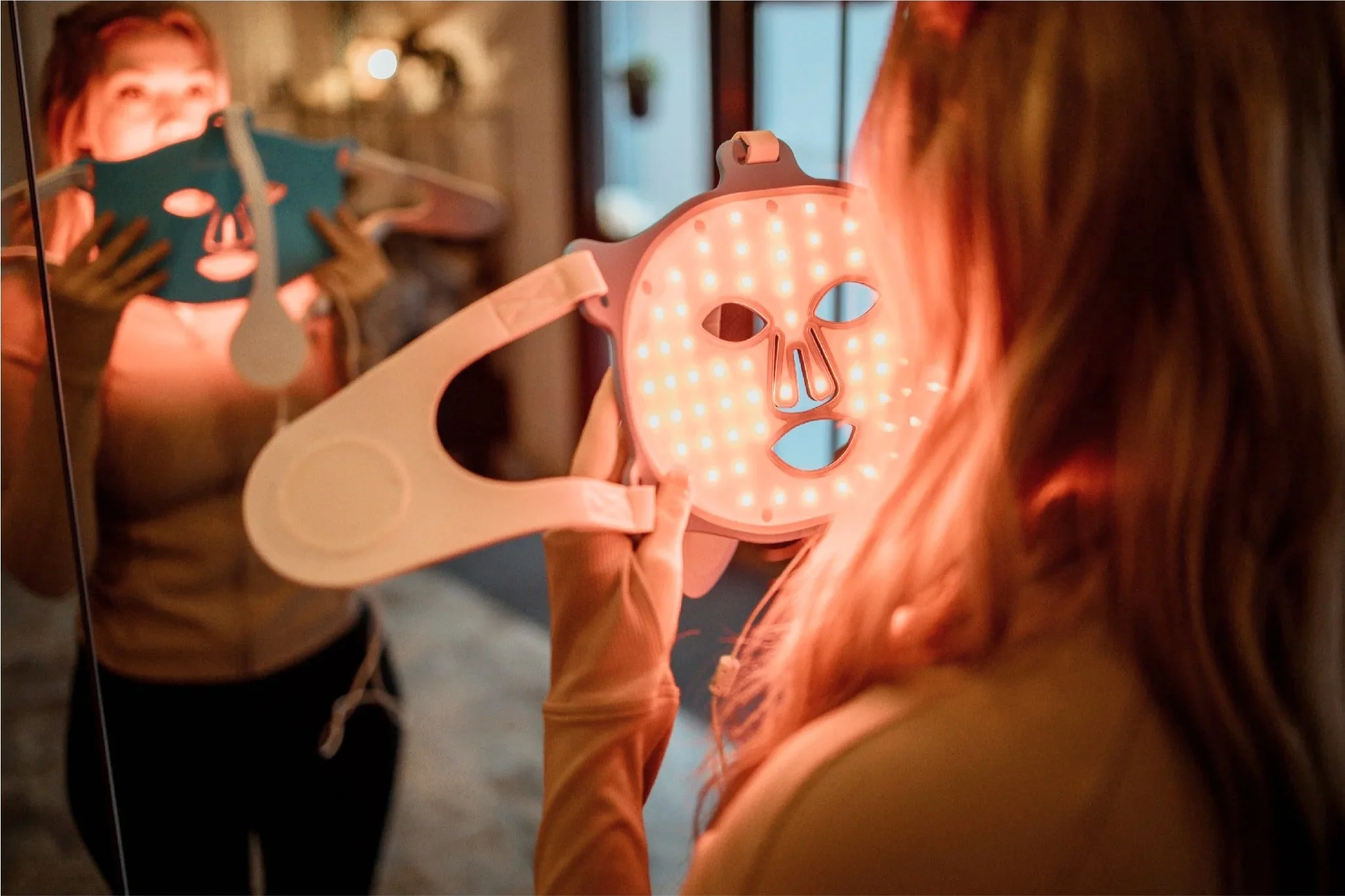
You may have heard people talk about red light therapy for sleep. Unlike the bright blue-white light from screens, red light is soft and warm, and the early research is interesting.
In one small 2012 study in the Journal of Athletic Training, 20 female athletes either received 30 minutes of red light each evening for two weeks or lay under the same device with the light off. The red light group reported better sleep quality and showed higher melatonin levels than the comparison group. It's one small study, and the researchers called for larger ones. So we see red light as a calming addition to good sleep habits, not a replacement for them.
What we can say from experience: a quiet session in a dim, warm room is a lovely way to slow down. For many of our clients, that alone is worth it.
Give yourself a little grace
If your sleep still feels off, it doesn't mean you're doing something wrong. Seasons change, and your body changes with them. Rest isn't something you earn by getting everything right.
If poor sleep lasts more than a few weeks, or you're regularly exhausted during the day, it's worth talking with your doctor. Ongoing sleep trouble can have causes a routine won't fix.
Finding your rhythm again
The time change is a small shift, but it lands on top of long nights, busy weeks and the start of the holiday rush. Bring light in early, turn it down at night, keep your wake-up time steady, and let your body catch up. At Ember, a red light session or a slow evening class can be a gentle part of that reset.
Ready to slow down?
If your evenings could use a softer landing, book a red light therapy session at Ember, stock up on sleep essentials, and give yourself a little quiet time. Book your slow down.